
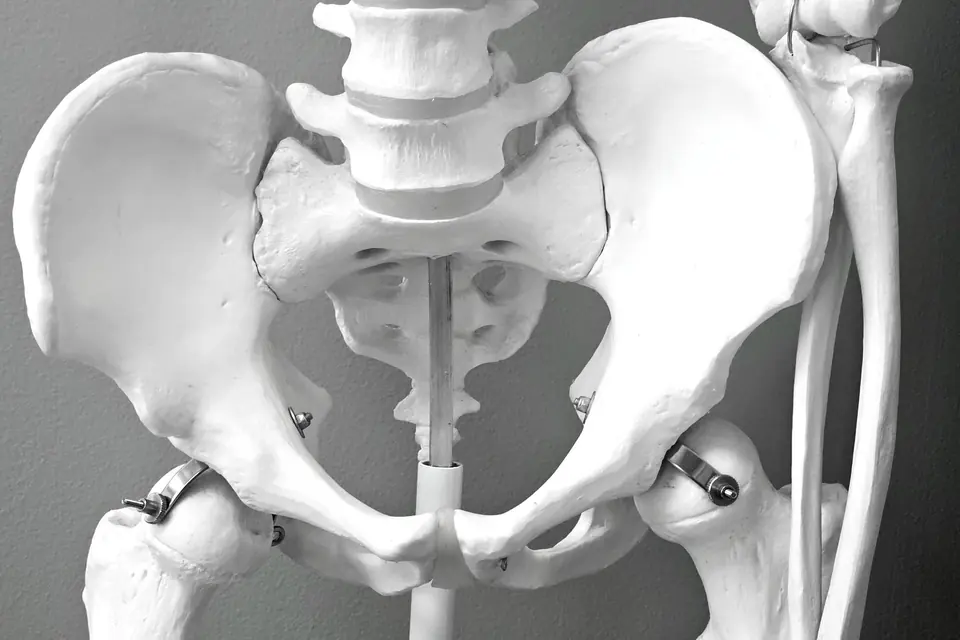
The hip is one of the joints that bear the greatest load in the body. Pain here is often confused with lower back pain, because pain originating in the lower back can also spread to the hip. For the right treatment, it first has to be established whether the pain really comes from the joint.
Symptoms
- Deep pain in the groin, the typical location of pain arising from the joint
- Pain on the outer side of the thigh and difficulty lying on that side (often a sign of bursitis)
- Difficulty putting on shoes, getting out of a car or moving the leg out to the side
- Morning stiffness, a change in gait, limping
- Pain that increases after walking for a long time
Causes
- Osteoarthritis (coxarthrosis): wear of the joint cartilage
- Trochanteric bursitis: inflammation of the small fluid-filled sac over the bony prominence on the outer side of the thigh
- Piriformis syndrome: irritation of the sciatic nerve by a deep buttock muscle
- Labral tear (damage to the joint’s rim of cartilage), impingement syndrome
- Pain referred from the lower back
Diagnosis
The examination checks the joint’s range of motion, the directions of movement that cause pain and muscle strength. X-rays show osteoarthritis, and MRI shows soft tissue damage. An ultrasound-guided diagnostic injection may be used to pinpoint the source of the pain.
Treatment
- Load management and exercise. Strengthening the hip and pelvic muscles significantly reduces pain.
- Weight control. Every extra kilogram increases the load on the hip joint.
- Ultrasound-guided injections. Hyaluronic acid into the joint, or targeted injections into the bursa or the piriformis muscle.
- PRP therapy, in suitable cases.
- Radiofrequency (RF) ablation of the nerve branches supplying the joint, especially in patients for whom surgery is not an option.
If the pain is getting worse quickly, wakes you at night, or comes with fever or follows an injury, do not delay getting examined.