
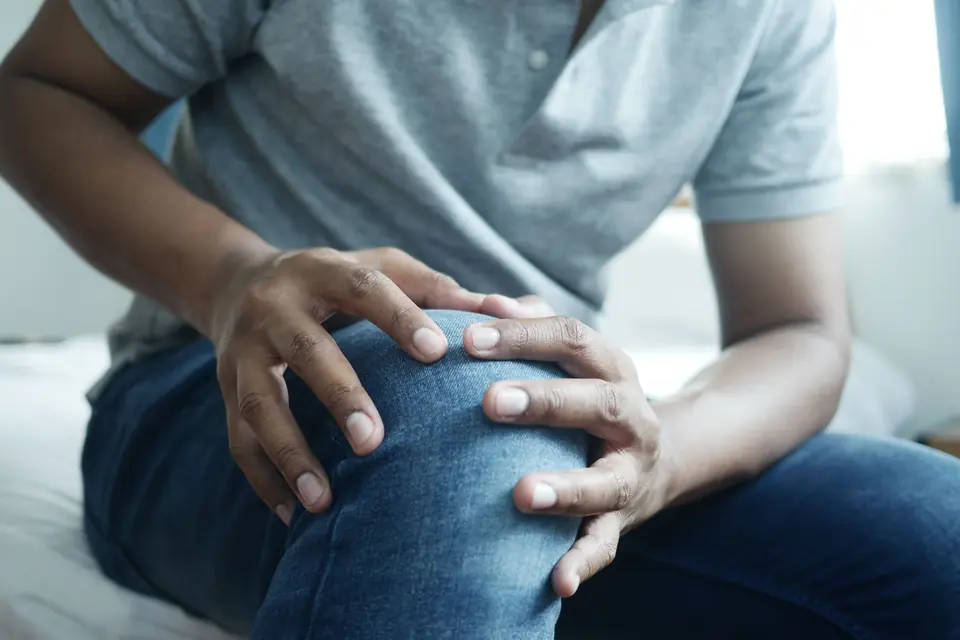
The knee is the second-largest joint in the body and carries a heavy load when walking and going up and down. It is made up of the thigh bone, the shin bones and the kneecap; the joint surfaces are covered with cartilage, the menisci lie between them, and around them are the ligaments and the joint capsule filled with synovial fluid.
Symptoms
- Pain that increases when walking and going up or down stairs
- Stiffness in the morning or after sitting for a long time
- Swelling, fluid build-up in the joint
- A grinding or “catching” sensation when moving
- The knee “giving way”, a feeling of instability when bearing weight
Causes
- Gonarthrosis (knee osteoarthritis): wear of the cartilage, the most common cause
- Meniscus injury: a twisting injury or age-related degeneration
- Ligament injuries: sports injuries
- Pain around the kneecap: muscle imbalance
- Bursitis and tendinitis: inflammation of the soft tissues around the joint
- Inflammatory joint diseases, gout
Diagnosis
The examination assesses joint stability, range of motion, fluid build-up and tender points. X-rays show the degree of osteoarthritis, and MRI shows meniscus and ligament injuries. Ultrasound allows the soft tissues around the joint to be assessed in real time.
Treatment
- Movement and strengthening. Strengthening the front thigh muscles is one of the most effective steps for knee pain.
- Weight control. Has a direct effect on reducing pain in osteoarthritis.
- Intra-articular injections. Hyaluronic acid reduces friction in the joint; PRP is used at suitable stages.
- Knee radiofrequency (RF) ablation (genicular nerves). Used to reduce pain in patients for whom knee replacement surgery is not possible or is being postponed.
Which method is suitable depends on the stage of osteoarthritis, the condition of the joint and your general health.