
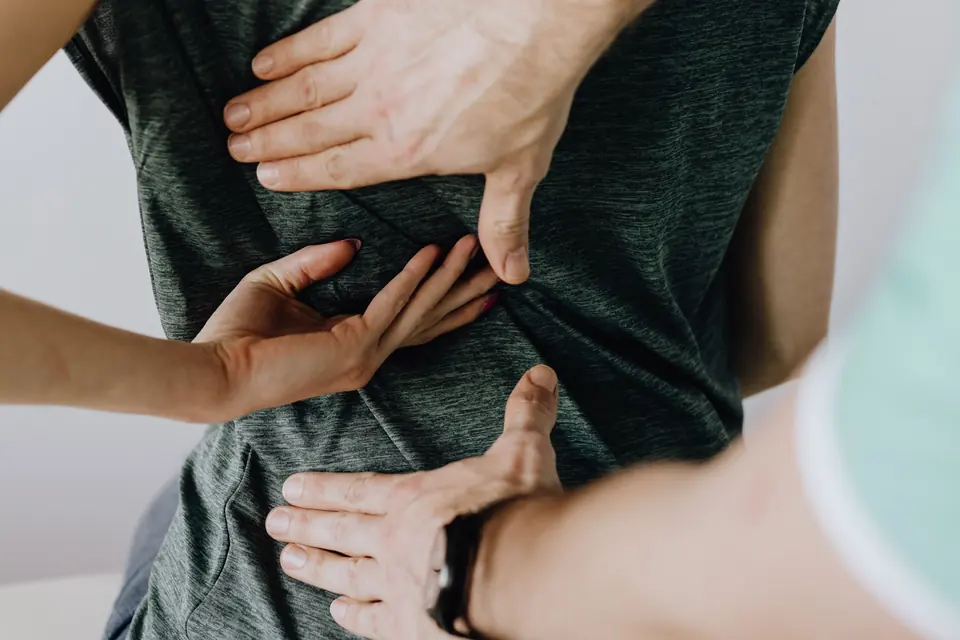
Low back pain is one of the leading causes of disability worldwide. The vast majority of people experience low back pain at least once in their lives. The good news is that most acute low back pain settles within a few weeks; the main task is to prevent the pain from recurring and becoming chronic.
Symptoms
- Dull or sharp pain in the lower back that worsens with movement
- Morning stiffness, difficulty standing up after sitting for a long time
- Pain spreading to the buttock, thigh and leg (sciatica)
- Numbness, pins and needles or weakness in the leg
- Pain that increases when coughing or sneezing
Causes
- Muscle and ligament injury: heavy lifting, a sudden movement
- Disc protrusion and herniation: pressure on a nerve root causes sciatica
- Facet joint syndrome: wear of the joints at the back of the spine; the pain changes when bending and straightening
- Sacroiliac joint problems
- Narrowing of the spinal canal (stenosis): pain and weakness in the legs when walking, relieved by sitting
- Vertebral fracture due to osteoporosis
Situations that need urgent attention
If you have any of the following, see a doctor without waiting:
- Loss of bladder or bowel control, numbness in the saddle area (between the legs and buttocks)
- Rapidly increasing weakness in both legs
- High fever, unexplained weight loss, a history of cancer
- Pain that starts after a serious injury
Diagnosis
The examination assesses the character of the pain, which movements change it and nerve function. Imaging (X-ray, MRI) is not always the first step, as changes on scans are not always the cause of the pain. Diagnostic blocks provide valuable information for pinpointing the source.
Treatment
- Staying active. Prolonged bed rest is harmful in low back pain; staying as mobile as possible speeds up recovery.
- Physiotherapy and exercise. Strengthening the back and abdominal muscles reduces the risk of recurrence.
- Medication. Short-term and supervised.
- Interventional methods. Depending on the source of the pain: transforaminal epidural steroid injection (TFESI), facet joint block and radiofrequency (RF) ablation, sacroiliac joint procedures, pulsed radiofrequency of the dorsal root ganglion. All procedures are performed under image guidance.
Surgery is discussed only when there are specific indications; most pain can be managed without an operation.