
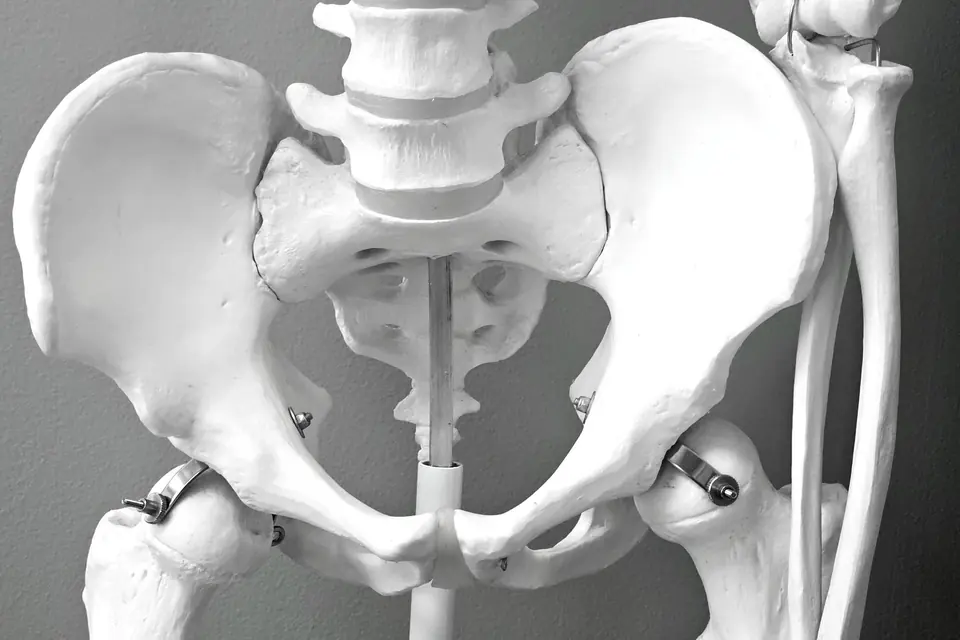
The sacroiliac joint connects the sacrum to the pelvic bone and transfers the body’s weight to the legs. This joint moves very little but carries a heavy load, and it is an often overlooked cause of chronic low back pain.
Symptoms
- Pain in the lower back, usually on one side, close to the buttock
- Pain spreading to the thigh or groin (usually not below the knee)
- Pain that increases after sitting for a long time, when standing up, climbing stairs or shifting weight onto one leg
- Discomfort when turning onto the painful side in bed
Causes
- Loosening of the ligaments during pregnancy and after childbirth
- Trauma: a fall or a car accident
- A difference in leg length, an altered gait
- Load shifting onto the joint after spinal surgery
- Inflammatory diseases (sacroiliitis)
Diagnosis
It is difficult to make the diagnosis from imaging alone. Several specific tests are used during the examination, and the most accurate method is an image-guided diagnostic block of the joint: a significant reduction in pain after the block confirms the source.
Treatment
- Physiotherapy: rebalancing the pelvic and hip muscles
- Image-guided injection into the joint
- If the pain returns, radiofrequency (RF) ablation of the nerve branches supplying the joint
- Correction of gait and leg length difference
If low back pain does not go away for a long time and treatment is not working, it is important to check the sacroiliac joint as well.